

Dessert Traditions of Istria (Kroštule, Fritule, Pandešpanj)
In Istria, desserts are not elaborate showpieces—they are quiet expressions of home. Simple, comforting, and steeped in tradition, local sweets reflect the region’s philosophy of letting honest ingredients speak without unnecessary excess. These desserts rarely appear on restaurant menus alone; they live most faithfully in family kitchens, at village festivals, and on long wooden tables where generations gather.
Kroštule – Sweet Ribbons of Celebration
Kroštule are perhaps the most recognizable Istrian dessert. Thin sheets of dough are cut into long strips, lightly twisted, and fried until crisp before being dusted generously with powdered sugar. Their light, flaky texture pairs beautifully with coffee or dessert wine.
Traditionally prepared during holidays and family gatherings, kroštule appear at weddings, religious feasts, and village festivals. Their preparation is often a communal affair—hands working together over flour-dusted tables, forming dozens of delicate ribbons ready for golden frying.
Each kitchen’s kroštule vary slightly: some include lemon zest or rakija for aroma, others remain refreshingly simple. Regardless of recipe, their delicate crunch remains an unmistakable sound of Istrian celebration.
Fritule – Small Bites of Comfort
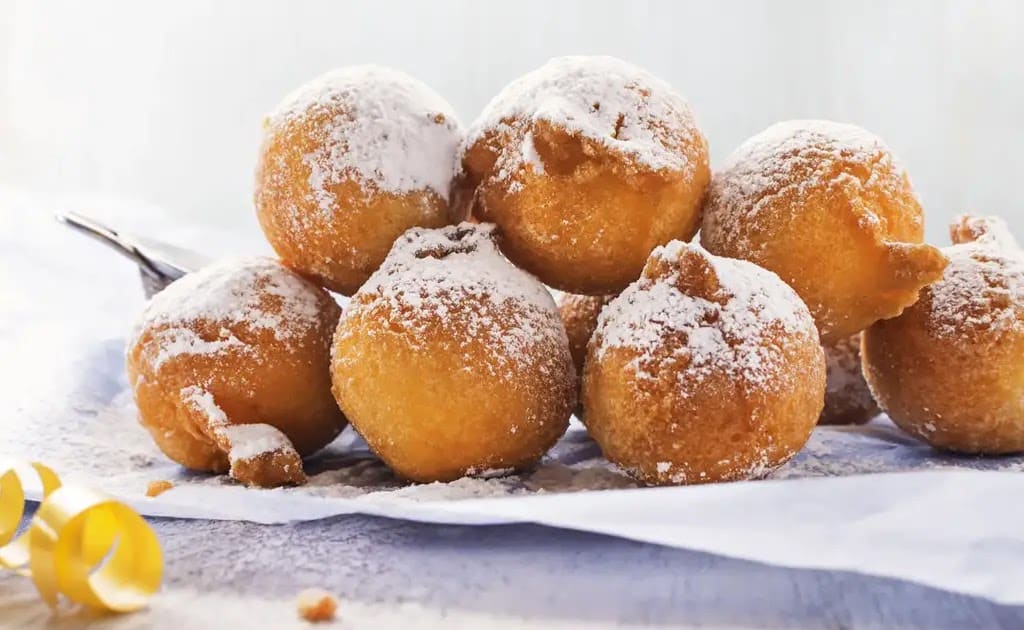
Fritule are bite-sized fried dough balls, golden outside and soft inside. Scented with citrus zest, raisins, rum, or rakija, these miniature delights are served dusted with sugar or drizzled with honey.
They appear most frequently during winter festivities and carnival season, although their popularity stretches year-round. Vendors offer them from small stands in town squares, filling the air with irresistible aromas that guide visitors through cobbled alleys.
In homes, fritule preparation becomes a cheerful ritual—children wait impatiently beside bubbling oil, sneaking the first warm pieces while cooks struggle to keep up with demand.
Pandešpanj – The Humble Sponge Cake
Pandešpanj represents Istria’s simplest sweet tradition: a light sponge cake made from eggs, sugar, and flour, occasionally infused with lemon zest, vanilla, or olive oil. Though unadorned, it serves as the gentle backbone of countless family meals and celebrations.
Often paired with seasonal fruit—fresh strawberries in spring, figs in summer, or preserved peaches in winter—pandešpanj adapts effortlessly to the flavors of each time of year. Some families drizzle their cakes with a splash of rakija syrup, adding a subtle adult note to this otherwise delicate dessert.
More Than Sugar
What unites these desserts is not complexity, but feeling. None rely on elaborate decoration or extravagant technique. Their sweetness lies in familiarity—the joy of recipes repeated over decades, the warmth of shared preparation, the satisfaction of something lovingly homemade.
To enjoy these desserts in Istria is to experience more than flavor—it is to taste comfort, nostalgia, and continuity served gently at the meal’s end.
A Sweet Farewell
From the fragile crunch of kroštule to the soft warmth of fritule and the comforting lightness of pandešpanj, Istrian desserts mirror the region itself: modest yet rich in character, shaped not by trends but by tradition.
Every sweet bite tells a story of kitchens filled with laughter, flour-dusted hands passing recipes forward, and the enduring beauty of simplicity that lingers long after the sugar dissolves.
Further reading suggestions

1.4.2025
Hidden Bays of Cape Kamenjak
If you're looking for a spot in Istria where you can truly escape the crowds, soak up the sun, and...

4.3.2025
Završje: A Silent Hilltop Gem
In the heart of northern Istria, not far from the more famous towns of Motovun and Grožnjan, lies Završje –...

5.9.2025
Istria300: Ride Your Limits on the Roads of Istria
On September 27th, 2025, Poreč once again becomes the beating heart of European cycling with the 5th edition of Istria300....
