

Fishermen’s Stories: Daily Catch of the Adriatic
While inland farmers greet the sun from vineyards and fields, Istria’s fishermen greet the day upon the sea. Long before café terraces open and beaches begin to stir, small boats glide quietly back toward harbor, carrying with them the night’s labor and stories shaped by salt, wind, and tide.
Return at Dawn
As first light brushes the Adriatic horizon, fishing boats unfold into coastal ports like Rovinj, Fažana, and Poreč. Nets heavy with sardines, mackerel, squid, and bream are hauled aboard as seabirds circle above, waiting their turn.
The sea decides each day’s outcome. Some returns are abundant, others modest. Yet every catch is greeted with humble pride—proof of one more successful dialogue between humans and the unpredictable waters.
The morning market buzzes briefly as fish is cleaned, weighed, and sold directly from wooden crates. Locals arrive early for the freshest selection, often greeting fishermen by name.
Generations of Knowledge
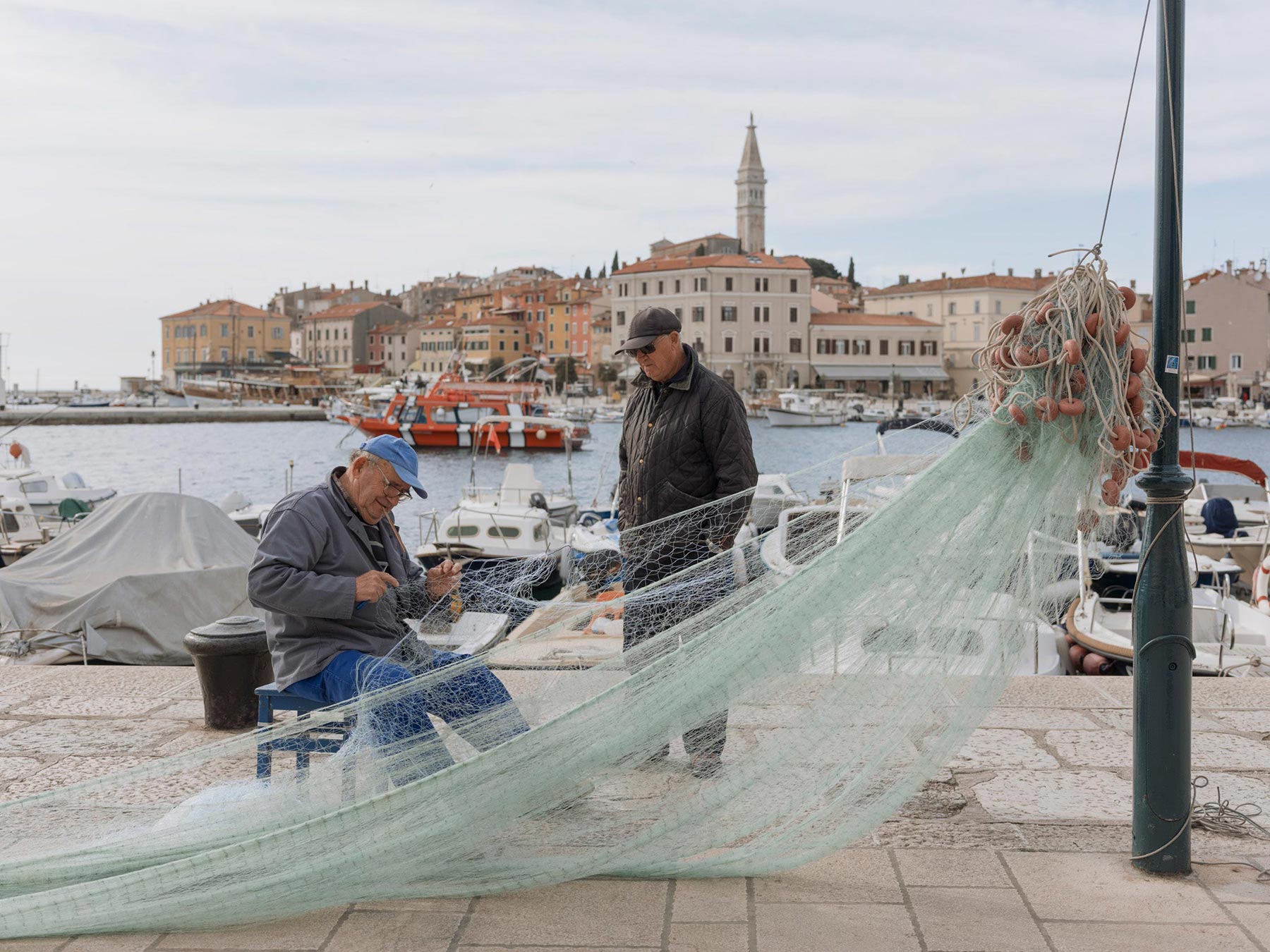
Fishing families trace their traditions back centuries. Skills are inherited quietly: how to read moon cycles, anticipate currents, interpret subtle weather shifts, and mend nets under lamplight.
Fathers teach sons the precise timing of net drops; grandfathers hand down knowledge of hidden reef formations and migratory routes. Modern GPS tools may assist navigation, but intuition still guides daily decisions as much as technology ever could.
Despite evolving equipment, the profession remains defined by endurance—the hours at sea are long, and the rewards never guaranteed.
From Boat to Table
Fresh Istrian fish rarely takes long to reach the kitchen. Many coastal taverns prepare same-day catch within hours of docking. Grills crackle beneath sea bream brushed with olive oil; calamari sizzle lightly stuffed with herbs; sardines grill whole and impossibly tender.
Recipes remain intentionally simple—sea salt, garlic, wine, parsley, and oil letting natural flavors speak unmasked. The freshness needs no elaboration, only restraint.
Lunch plates across coastal promenades often feature fish that was swimming only hours earlier.
Life Between Tides
For fishermen, work extends beyond catching fish. Nets must be repaired daily, hulls repainted, engines maintained. Seasons influence livelihoods directly—winter storms limit outings, while tourist summers boost demand.
Community remains central. Docks host spontaneous gatherings where coffee is shared, sea conditions debated, and past adventures retold. Rivalries soften into camaraderie forged by shared dependence on the same waters.
Echoes of the Adriatic
There is poetry in the fishermen’s way of life—quiet dedication guided by forces larger than human will. Each haul carries echoes of the ancient maritime trade routes that once connected Istria to Venetian galleys, Greek merchants, and Roman fleets.
When visitors enjoy a plate of grilled fish beside the sea, they taste not just the Adriatic’s bounty but the continuity of coastal tradition preserved by fishermen who still greet the sunrise from shifting decks.
Further reading suggestions

12.5.2025
Rovinj for Couples: A Romantic Guide to Croatia’s Most Charming Town
Rovinj for Couples truly lives up to its reputation as the most romantic town in Istria – and for good...

13.4.2025
Adventure Park Sky Fox: Soaring Through the Oaks of Istria
Nestled in a serene oak forest near Tar, just off the Poreč–Novigrad road, Adventure Park Sky Fox offers a thrilling...

17.4.2025
Grožnjan: The Town of Artists
Perched on a hill in northern Istria, Grožnjan might be small in size, but it’s bursting with creativity. With its...
