

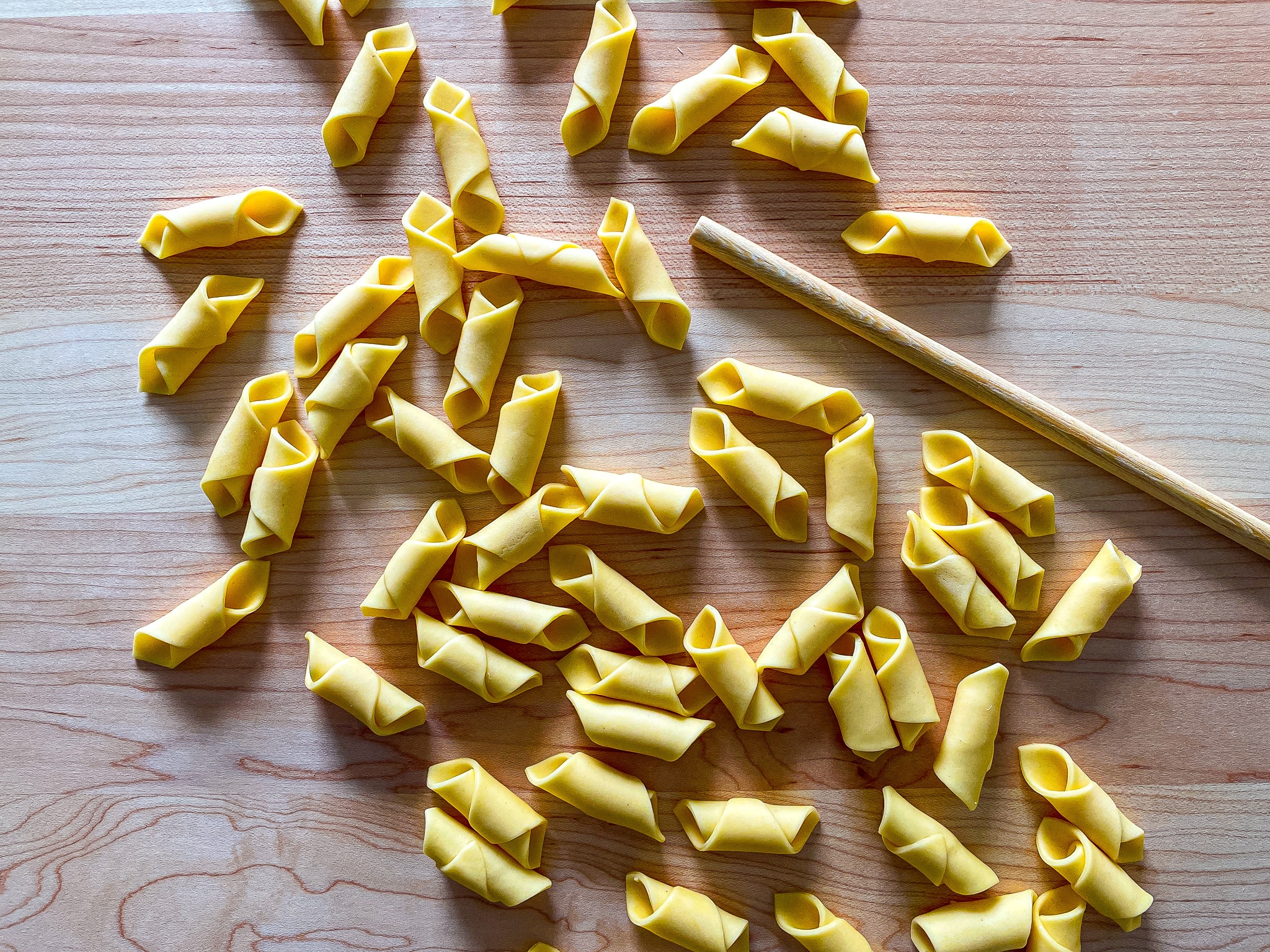
The Art of Fuži: Handmade Pasta Traditions
Among Istria’s many culinary symbols, few feel as personal and deeply rooted as fuži pasta. Twisted by hand from simple dough, fuži is not just a beloved dish—it is a centuries-old family tradition passed from kitchen to kitchen, shaped more by memory and rhythm than formal recipes. To witness the making of fuži is to step directly into the heart of Istrian home cooking.
A Shape Born of Simplicity
Fuži begins with the simplest ingredients: flour, water, a pinch of salt, and a smooth wooden work surface. There are no machines, no cutting guides—only steady hands and practiced movements. Dough is rolled thin, cut into small diamond-shaped squares, then folded diagonally over a finger or thin stick to form hollow spirals. Each twist is unique, bearing the subtle imprint of its maker.
The motion is rhythmic and almost meditative. Fingers move across the table in quiet repetition, turning hundreds of small squares into rows of carefully crafted pasta within minutes. What might seem slow to outsiders becomes effortless to those who learned the process as children.
Learning at the Kitchen Table
Fuži is rarely taught formally—it is absorbed. Grandmothers guide grandchildren’s hands, correcting angle and pressure with soft encouragement. Mistakes become laughter, oddly shaped noodles proudly cooked alongside perfect ones. No two households make fuži exactly the same; the slight differences in size and twist reflect individual family traditions.
In village kitchens, conversations flow as pasta forms. Stories of past harvests and upcoming weddings mingle with the sound of rolling pins tapping wooden tables. Making fuži is rarely a solitary act—it is something shared, reinforcing bonds between generations.
Sauces that Complete the Story
Fuži’s hollow, spiraled shape is perfectly designed to capture rich Istrian sauces. Classic pairings include slow-cooked boar ragù, thick rooster stews, and creamy truffle sauces that coat each fold of dough with aroma and depth. Mushroom sauces, especially during the autumn foraging season, offer earthy balance, while lighter tomato sauces brighten summer variations.
The pasta’s texture—soft yet resilient—holds sauces without overpowering them. Each bite brings a harmonious blend of tender dough and deeply flavored accompaniment, making fuži a fixture of celebratory meals and Sunday family lunches.
From Homes to Taverns
Though it was born in family kitchens, fuži has found its way into nearly every traditional konoba in Istria. Quality taverns still roll their pasta daily, viewing prepared versions as an unacceptable compromise. Guests can often glimpse kitchen staff twisting noodles behind open doors as lunch service approaches.
In these restaurants, fuži serves as a bridge between rustic tradition and modern gastronomy—paired with fine wines, seasonal ingredients, and contemporary presentations while still honoring old methods.
A Symbol of Istrian Identity
More than a meal, fuži stands as a culinary emblem of local pride. It reminds visitors that Istrian cuisine thrives on authenticity rather than extravagance. The pasta reflects everything the region values: simplicity, patience, air of masterful humility, and respect for heritage.
In each hand-twisted piece lies an inherited rhythm—one that stretches across centuries of kitchen tables and continues to connect families, neighbors, and travelers to the enduring heart of Istria’s culinary traditions.
Further reading suggestions

25.4.2025
Savudrija Lighthouse: Guiding Ships and Stories Since 1818
The lighthouse is more than just a beacon; it is part of Istria’s maritime heritage. Built during the Austro-Hungarian Empire,...

2.4.2025
Dvigrad: The Forgotten Medieval Town
In the quiet hills of central Istria, about 20 kilometers from Rovinj, lie the ruins of Dvigrad – a medieval...

9.12.2025
Seasonal Cuisine in Istria: What to Eat Month by Month
In Istria, cuisine follows the calendar of nature rather than printed menus. Each season reshapes the table entirely, offering flavors...
