

From Field to Table: A Day with an Istrian Farmer
In Istria, food begins long before it reaches the table. It starts with quiet footsteps through dew-covered fields, soil under fingernails, and the golden first light brushing vineyard slopes. The region’s cuisine is not shaped by recipes alone but by daily rituals—by farmers who still work the land with their hands, guided by rhythms older than modern roads and reservations. Spending a day with an Istrian farmer offers a rare invitation into a way of life where food is not produced but carefully grown, gathered, preserved, and honored.
Morning in the Fields
As dawn rises over terraced hills, farmers move through olive groves and vegetable gardens long before the world wakes up. Baskets fill with tomatoes warmed by early sun, bunches of fresh chard, clusters of grapes heavy with sweetness, and sprigs of wild herbs gathered along forest edges. The scent of soil mixes with rosemary carried on a light breeze.
There is no rushing here—only steady repetition shaped by decades of inherited knowledge. Tools lean against ancient stone walls, worn smooth by countless seasons. Each harvest is taken gently, almost reverently, as farmers understand their role not as owners of the land but as its guardians.
Workshops of Flavor
By midmorning, rural courtyards echo with quiet activity. Produce is washed at outdoor stone basins while nearby kitchens transform into workshops of flavor. Copper pots simmer with marmalades made from figs or sour cherries, cheeses are molded by hand, and dough is kneaded for that day’s bread and pasta.
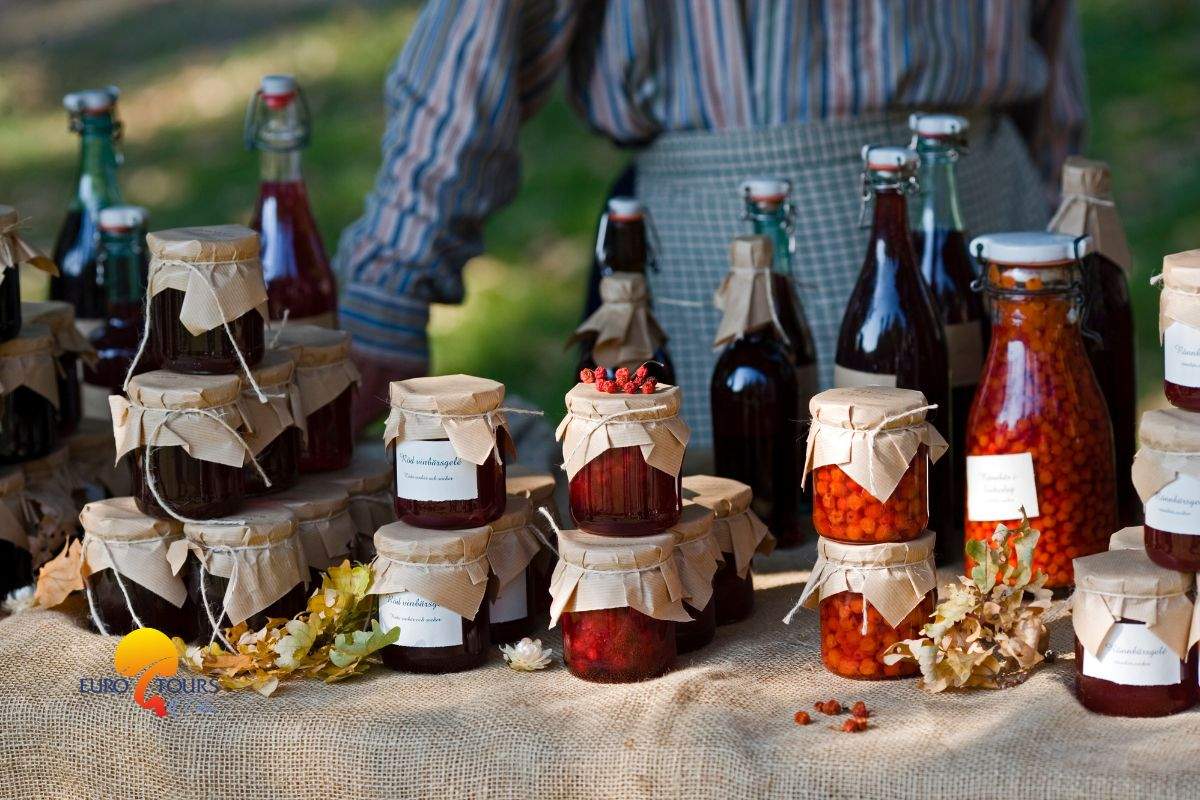
Smoke curls softly from backyard grills where sausages made from local pork slowly cook. Glass jars filled with preserved vegetables line pantry shelves—a colorful record of summer abundance carefully stored for winter days. In these kitchens, nothing is wasted; even vegetable scraps become stock while fruit peels find new life in homemade rakija infusions.
The Family Table
Lunch is the heart of the farm day. Family members gather without ceremony but with deep respect for the meal itself. Freshly rolled fuži pasta is dressed with a simple tomato sauce or truffle cream. Pršut is sliced thin and arranged beside young sheep cheese. Bread still warm from the oven is torn rather than cut, dipped generously into peppery olive oil.
Wine flows modestly—often the family’s own vintage—while laughter moves freely across the table. Meals are unhurried, sometimes stretching long into afternoon conversation. Stories of weather, harvest challenges, and old village legends blend seamlessly with plates that empty slowly rather than quickly.
Afternoon Rhythm
After lunch comes continued labor, but at an easier pace. Olive trees are pruned, beehives inspected, fences repaired. Older family members clean tools or shell beans beneath the shade of fig trees while children run between vines chasing cicadas. The pace reflects an understanding that productivity does not require haste—only consistency and care.
This rhythm builds not only crops but community. Neighbors often stop by to exchange produce, borrowed tools, or seasonal recipes. Farm life here is deeply social, rooted in cooperation rather than isolation.
The Meaning of the Land
A day spent with an Istrian farmer reveals that the region’s cuisine is inseparable from its landscape. Every ingredient bears the fingerprint of climate, wind, soil, and human devotion. Food is direct, honest, and deeply personal, shaped not by commercial demand but by tradition and seasonality.
By the time evening shadows stretch across the vineyards and dinner leftovers are neatly stored for tomorrow, visitors understand why Istrian dishes taste the way they do. The flavors carry more than fresh ingredients—they carry patience, history, and a genuine relationship between people and the land they tend.
In Istria, “from field to table” is not a slogan—it is a living philosophy, practiced daily by hands that connect earth to plate with quiet dedication.
Further reading suggestions

7.5.2025
Paleo Park Bale: Dive into Prehistoric Fun
Nestled near the historic town of Bale in Istria, Paleo Park Bale offers a unique blend of aquatic adventure and...

5.4.2025
Kayaking Lim Bay: Paddle Through Istria’s Fjord
Kayaking Lim Bay - The Lim Bay (Limski kanal) stretches inland like a slender fjord, flanked by steep green hills...

24.7.2025
Skitača Viewpoint: A Panoramic Window Over Kvarner Bay
Nestled in the remote southeastern hills of Istria, Skitača Viewpoint offers one of the most breathtaking panoramic views on the...
